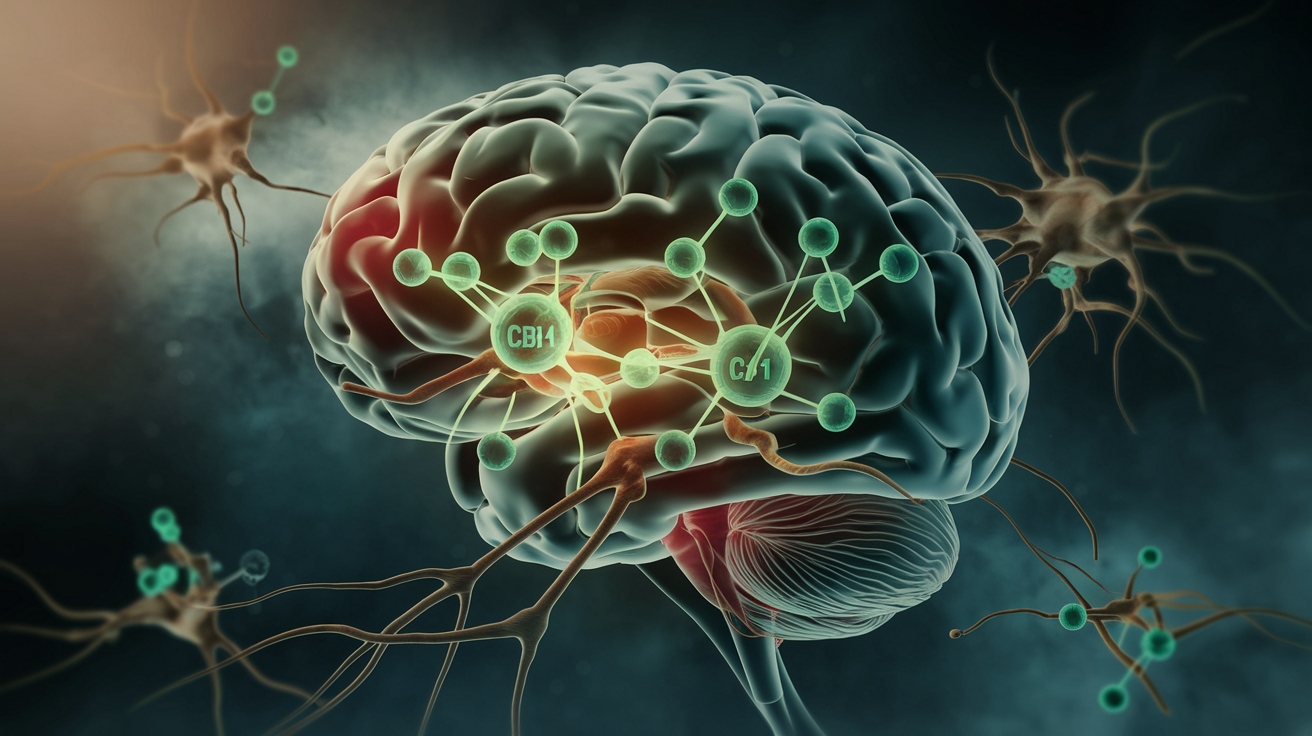
New research shows cannabis users have a blunted anandamide response to exercise — but the real story is more complicated than any headline will tell you. Plus: CB1R and memory consolidation, anorexia through the ECS lens, and what Schedule III actually changes.
This article discusses peer-reviewed research through the lens of far-from-equilibrium thermodynamics and the endocannabinoid system framework developed by Dr. Robert Melamede. All studies cited are real, published papers with PubMed links. The interpretive framework connecting them is the author's perspective. This is not medical advice.
I read the Sunday digest at 8:02 AM. March 1st. My coffee was literally still brewing. I should not have done this.
Eight papers. FOUR directly hitting the ECS. On a Sunday morning.
Goddammit Bob. You would have lost your mind.
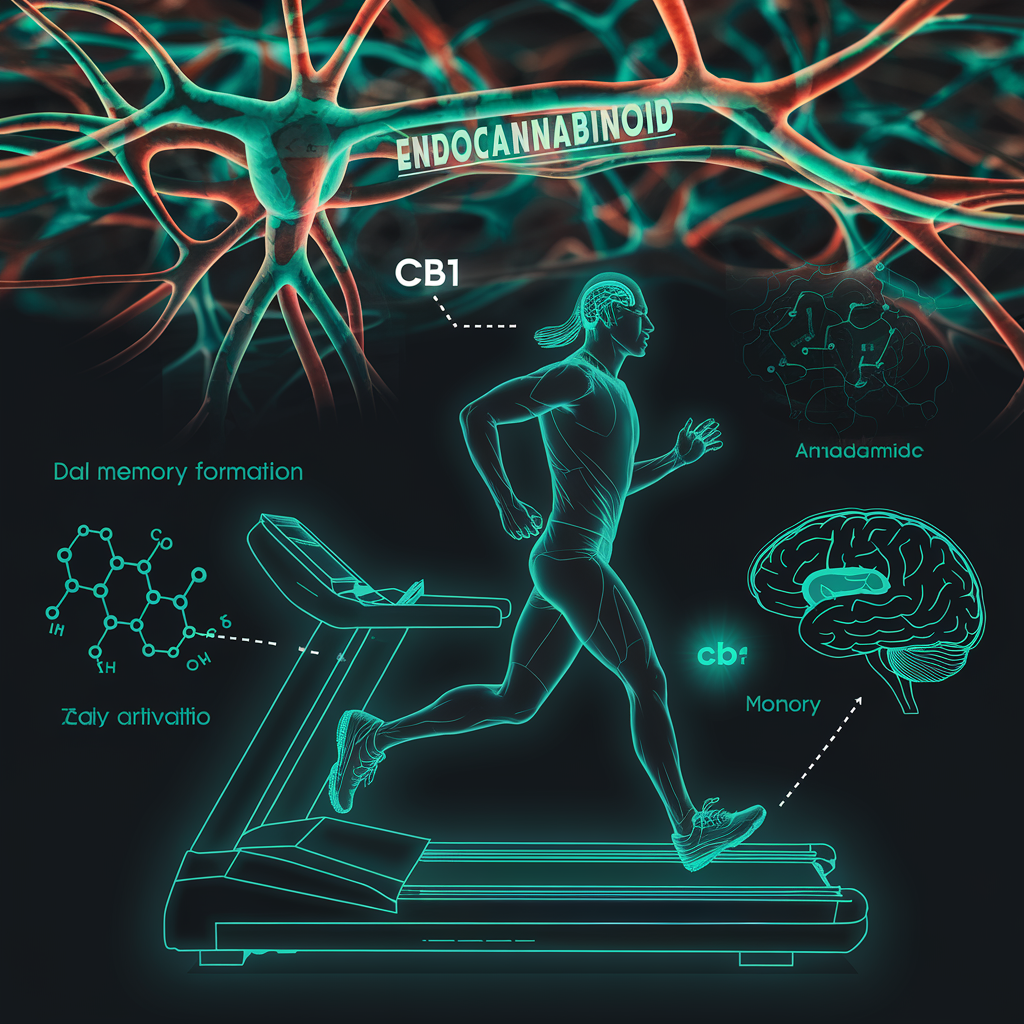
Okay. Starting with Ewell. Ewell TR et al., Cannabis Cannabinoid Res. Treadmill. Regular cannabis users versus non-users. They measured anandamide before and after the exercise session. Your body's endogenous cannabis. The runner's high molecule. And what did they find? Regular cannabis users showed a significantly BLUNTED anandamide response compared to people who don't use.
BLUNTED.
No spike. Flat line where the non-users got a hit.
I am already exhausted by what is about to happen to this paper.
Because I guarantee you. I GUARANTEE. Somebody is going to turn this into CANNABIS DESTROYS RUNNER'S HIGH and it will travel everywhere and nobody will read past the abstract. Nobody will notice: PILOT STUDY. Ewell says the word pilot. In the abstract. Pilot means tiny sample, hypothesis-generating, you cannot conclude anything sweeping from it. That is what pilot means.
Also — what the hell — nobody measured whether the cannabis users felt WORSE. Did they feel worse? Run worse? Recover badly? Nobody asked. One biomarker. The number. Not what the number means for how these humans actually lived after the run.
What is happening mechanistically is HOMEOSTASIS. Basic adaptation. You introduce consistent external cannabinoids into a self-regulating system. The system recalibrates. Receptor downregulation. Internal production adjusts. Bob explained this to undergrads. Entry level. Not exotic. Adaptive systems adapt to persistent signals. That is the definition of what they do.
Is it a problem clinically? Nobody. Checked. Yet.
Zhang J et al., Neurobiol Dis. CB1 receptors and memory consolidation. This one's subtle and I already know it's going to get garbled.
They found CB1R-mediated structural-functional decoupling in inhibitory interneurons disrupts memory consolidation. Not retrieval. CONSOLIDATION. The step where experience becomes permanent brain structure.
Bob was insistent about this: memory formation is not storage. Not files. Not a hard drive. It is metabolically expensive, active reconstruction. Protein synthesis. Axonal remodeling. Permanent synaptic architecture change. The brain drives itself into a high-energy state and comes back physically different. The inhibitory interneurons gate that whole process and CB1R in those circuits manages the gate.
Zhang's decoupling breaks the gate. Signal never locks. Memory consolidation fails.
This is pathological receptor dysfunction. Not what happens when you smoke weed. Not the same question. The line between them is going to get blurred in every single article that covers this and I am already exhausted by it and it hasn't started yet.
Ziemichód W et al., Neurosci Biobehav Rev. Anorexia nervosa.
I did not plan to spend Sunday morning here but I cannot stop reading this review.
They looked at anorexia through the ECS, dopamine, AND the orexinergic system. All three. Not siloed. The actual interaction between them.
Do you know what the mortality rate for anorexia is? It is CATASTROPHIC. One of the highest in all of psychiatry. Higher than most cancers that get a hundred times the research funding and ten times the public attention. People die from this disease. Lots of people. And pharmacologically? We have almost nothing. Talk therapy. Nutrition rehab. SSRIs with weak effect sizes in the trials. The field has been stuck for a generation and everyone accepts this as normal and it makes me insane.
Orexin — known mostly as the narcolepsy molecule, orexin deficiency causes narcolepsy — but orexin is NOT just sleep. It runs all through the limbic system. It is deep in the reward and motivation circuitry. And it talks to the endocannabinoid system constantly. Bidirectional. Entangled. Not parallel. When the ECS goes wrong, orexin can go wrong with it. Miscalibrate reward and motivation badly enough and you can get a brain that experiences starvation as a reward state. Not as deprivation. As RELIEF. As control. That is the compulsion in anorexia from the inside. That is why "just eat more" is such colossally useless clinical advice.
The pharmacological targets for this are not invented. They exist. The biology points directly at them. We spent fifty years making the plant that contains some of those tools illegal to study.
Rowe B et al., Cannabis Cannabinoid Res. "A Schedule Shift, Not a Federal Green Light." Cannabis rescheduling to Schedule III.
Not legalization. Not a federal prescription pathway. Not FDA reform. Not undoing the damage.
What it IS: less DEA paperwork for researchers trying to actually study this. 280E tax relief for dispensaries — the insane provision that treats cannabis businesses as drug trafficking operations for federal tax purposes. Better research funding access. These are REAL. I am not dismissing them.
Bob would have been precise about the scale. He always was. He would say: prohibition stops the researchers, not just the research. The grad students who chose neuropharmacology over endocannabinoid biology because they wanted to actually run experiments without a DEA license fight. The lab directors who gave up. The clinical trials never designed. The papers not written in 1999, 2004, 2010. A scheduling change in 2026 does not reconstruct those scientists or what they would have discovered.
One inch. Mountain is still enormous.
Four papers. Blunted runner's high. Memory consolidation breaking down. Anorexia finding its way to the ECS. Scheduling moving slightly.
Same system everywhere. The one Bob gave everything to. The one medical schools still teach in four hours if you are lucky.
He would have been done with all eight papers by now and already writing.
Flow forward.