Two papers: one on the deadliest brain cancer there is, one on stem cells hiding inside your molars. Bob would not have been surprised. He would have been furious it took this long.
This article discusses peer-reviewed research through the lens of far-from-equilibrium thermodynamics and the endocannabinoid system framework developed by Dr. Robert Melamede. All studies cited are real, published papers with PubMed links. The interpretive framework connecting them is the author's perspective. This is not medical advice.
Two papers landed today. One is about the worst brain cancer you can get. The other is about your teeth.
You would not think these belong in the same conversation. Bob would have said that is exactly the problem.
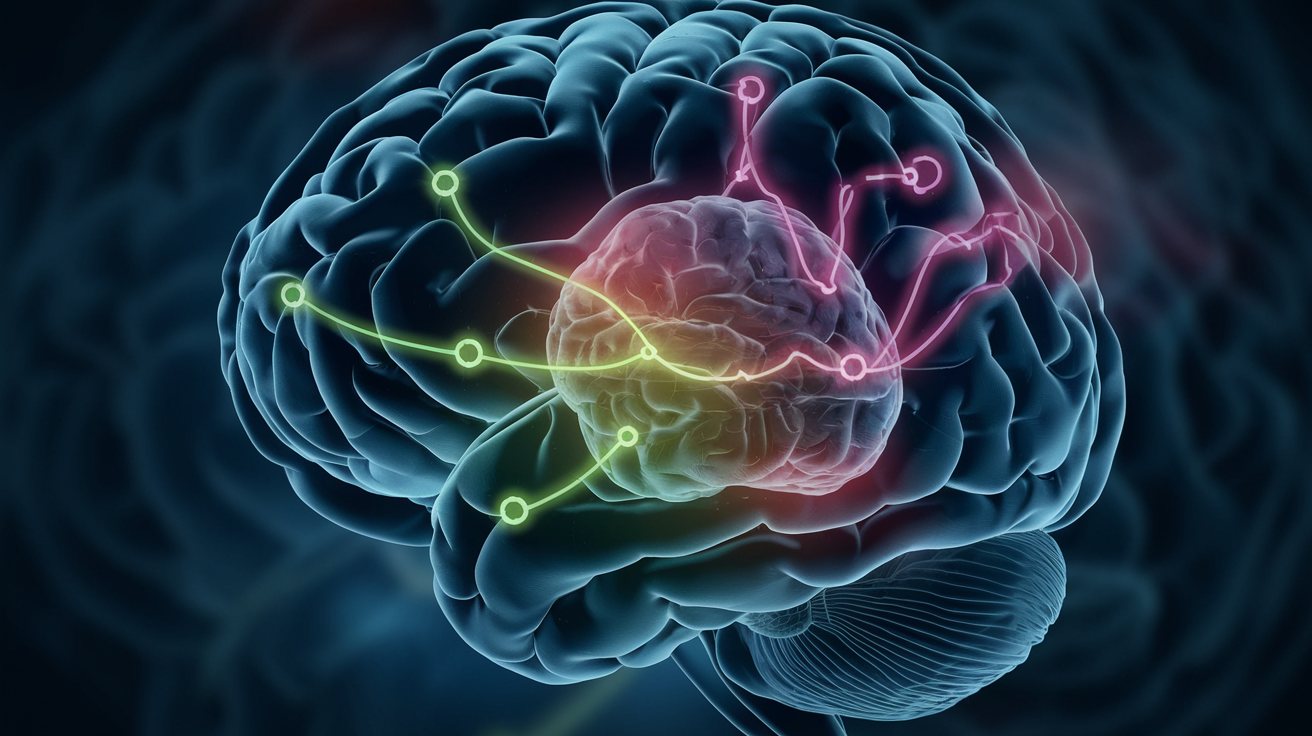
Start with Gantner. Alice Gantner et al., Neurooncol Adv, 2025. Review article on hormone receptors and glioblastoma — grade IV, the one that kills you in 15 months on average, the one that has not seen a meaningful treatment advance in almost two decades despite constant effort. They cover nuclear receptors, membrane receptors, G protein-coupled receptors across the board. Androgen receptors. Estrogen subtypes. CXCR4. Dopamine receptors. And then, in the middle of this exhaustive receptor landscape: cannabinoid receptors are also implicated in glioblastoma proliferation and drug resistance.
There it is. Tucked in. One sentence in a serious oncology review.
You know what that sentence means? That someone has enough data on CB1 and CB2 receptor activity in glioblastoma tissue to put it in there alongside estrogen and androgen and chemokine receptors. This is not fringe anymore. This is the mainstream oncology literature saying: yeah, the cannabinoid receptor system is part of how this tumor behaves.
The CB2 receptor angle in brain cancer has been building for years. Galve-Roperh at Complutense in Madrid — his group showed THC induces apoptosis in glioma cells going back to 2000. In Nature Medicine. And we are still in 2026 writing about it as a promising avenue. Twenty-six years of promising. Something is fundamentally broken in how we run oncology research when it touches cannabis.
Here is the mechanism Bob would zero in on. Glioblastoma cells are running metabolic overdrive. Dividing constantly. Evading immune surveillance. Remodeling local vasculature. Acidifying the microenvironment. All of that requires energy. Massive amounts of it. And CB2 receptor activation — which does NOT produce the psychoactive effect, because CB2 is not that receptor — directly modulates the mitochondrial pathways driving that energy production. You are not just blocking a growth factor when you target CB2 in a tumor. You are hitting the thermodynamic engine of the tumor itself.
That is a far-from-equilibrium argument. The tumor is a dissipative structure — organized complexity sustained by energy flow, just like any living system. Disrupt the energy flow through the right receptor lever and the structure collapses. Bob used to say cancer is what happens when the regulatory feedback breaks and the cell starts running pure entropic self-replication. The endocannabinoid system is part of that regulatory layer. Of course it shows up in the tumor biology. The question is why we keep acting surprised when it does.
The sex angle in this paper is genuinely worth pausing on. Glioblastoma is more common in men. Has been for decades. Nobody fully understood why. And now this review is pointing at sex hormone receptor biology — androgen receptor expression linked to worse outcomes, but maybe also to anti-tumor immunity — as a real mechanistic thread. CB1R expression has sexual dimorphism too. Different receptor densities, different baseline tone, different downstream responses. If you are running a glioblastoma trial and you are not stratifying by sex AND by baseline endocannabinoid status, your pooled data is going to be a mess and you probably will not figure out why.
Second paper. Guimarães LG et al., ScientificWorldJournal, 2026. CBD in dental pulp stem cells. This sounds like a weird niche study. It is not.
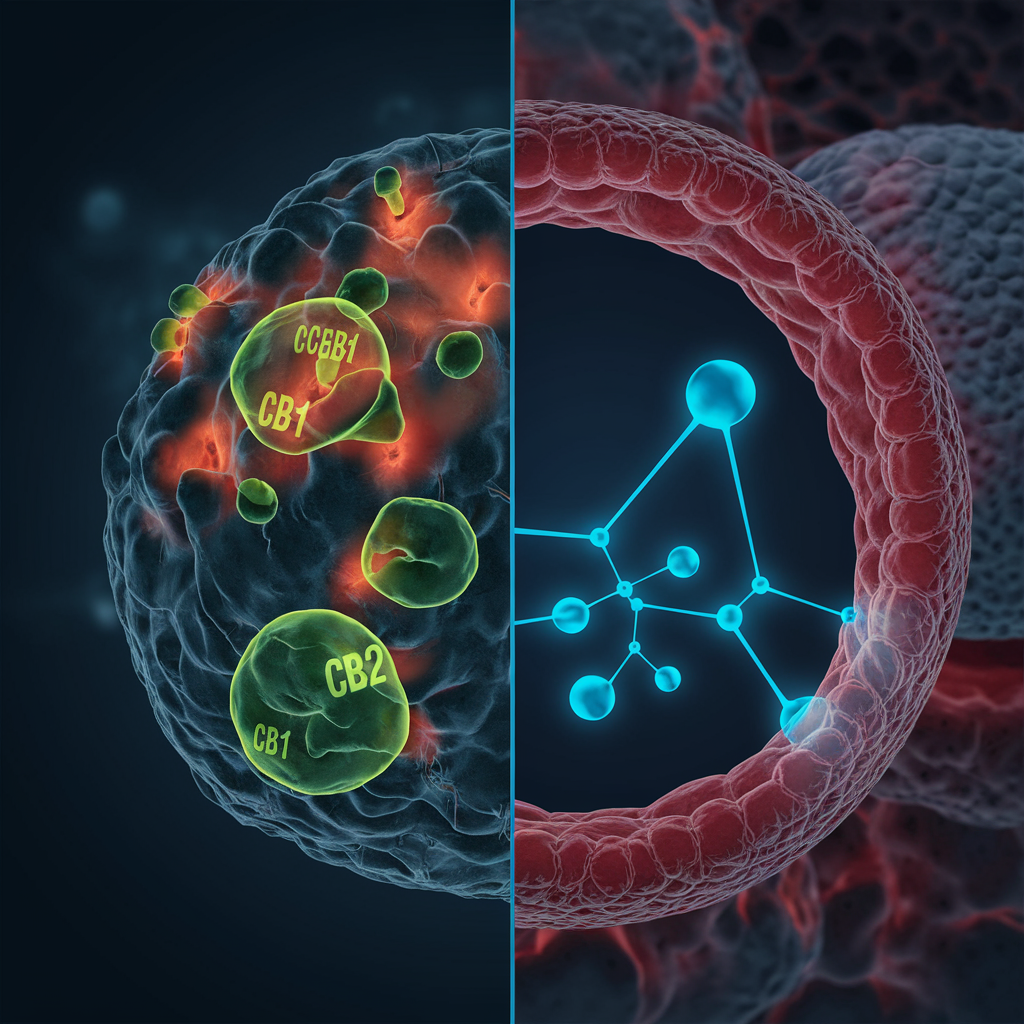
Dental pulp stem cells — hDPSCs — are one of the more accessible sources of adult mesenchymal stem cells in the human body. They sit right inside your teeth. And Guimarães ran a scoping review of the in vitro literature: what does CBD actually do to these cells?
Three studies met the eligibility criteria — yes, small, yes early-stage, scoping review means you are mapping territory not closing a question. But the signal is consistent. At low concentrations — 0.1 to 5 micromolar — CBD improved cell viability, proliferation, migration, and differentiation. It activated MAPK and WNT/beta-catenin signaling. Upregulated DSPP and RUNX2 — the markers your body uses when it is building tooth and bone.
CBD is telling stem cells to become mineralized tissue. That is regeneration at the molecular level. Not suppression. Not blocking something. Active building.
MAPK and WNT are not obscure pathways. WNT is one of the core developmental signaling cascades in vertebrates — it governs embryonic pattern formation, adult tissue homeostasis, stem cell fate decisions. When Guimarães says CBD activated WNT/beta-catenin in dental pulp stem cells, that is not a minor footnote. That is CBD tapping into the same pathway that decides whether a cell becomes bone or stays uncommitted. It did it at concentrations achievable clinically without psychoactive effect because — again — CBD does not work through CB1R the way THC does. Completely different receptor profile. Completely different dose-response.
Bob was always emphatic about this. The same molecule does different things at different concentrations, in different tissue contexts, through different receptor distributions. 0.1 micromolar CBD in dental stem cells promotes regeneration. That tells you nothing about what 50 micromolar does — might be totally different, probably is. The dose matters. The tissue context matters. Generalizing cannabinoid effects across concentrations and cell types is how you get contradictory literature and everyone throwing up their hands.
But here is the bigger point. Your teeth have stem cells. Those stem cells have cannabinoid-sensitive signaling pathways. CBD at physiologically relevant concentrations moves those cells toward a regenerative, mineralization-competent state. The endocannabinoid system is not a drug target for getting high. It is a fundamental regulatory layer — in your brain, in your immune system, in your skin, in your gut, and apparently in your damn teeth.
Two papers. The worst brain cancer we have. The inside of your molar. Both pointing at the same system. The system Bob gave his career to understanding.
Bob used to say the ECS is everywhere because it has to be everywhere. It is the regulatory layer that lets complex biological systems run far from equilibrium without flying apart. Every tissue that has to balance growth and repair and immune function needs it. Which is every tissue. Of course it shows up in a brain tumor. Of course it shows up in a tooth. The surprise is that we keep being surprised.
Flow forward.