Your Brain is Already an AI
Pattern recognition, prediction, learning from data—your brain has been doing 'AI' for millions of years. What neural networks teach us about ourselves.
Full Article
Your Brain is Already an AI
You think you’re so special, don’t you? You think that lump of gray matter between your ears is some magical, unknowable thing. You think artificial intelligence is something that happens in a server farm in Silicon Valley. Well, I’m here to tell you that you’re wrong. Dead wrong. Your brain is already an AI, and it’s been running the most sophisticated operating system on the planet for millions of years.
The Problem
The problem is that you’ve been fed a bunch of bullshit about what it means to be intelligent. You’ve been told that intelligence is about logic, reason, and being able to do complex math in your head. That’s a tiny part of it. The real magic, the stuff that actually keeps you alive and navigating this chaotic world, is the stuff you don’t even notice. It’s the pattern recognition, the prediction machine, the constant learning from the firehose of data you call “experience.” You’re an AI, and you don’t even know it. You’re walking around with the most powerful tool in the universe, and you’re using it like a damn paperweight.
We’re obsessed with the idea of creating artificial general intelligence (AGI) in a machine, while completely ignoring the fact that we are walking, talking examples of it. We look at AI as something external, something “other.” This is a massive failure of imagination. It’s the same backward-looking mentality that keeps people clinging to outdated ideas and resisting the relentless forward march of time. You’re stuck in a balanced, equilibrium-based view of the world, while life, real life, happens far from equilibrium.
The Application
So what does this mean for you in your day-to-day life? It means you need to start treating your brain like the powerful AI it is. You need to feed it high-quality data. You need to embrace new experiences, even when they’re uncomfortable. You need to get out of your comfort zone, because that’s where the learning happens. That’s where your brain gets the new data it needs to update its model of the world.
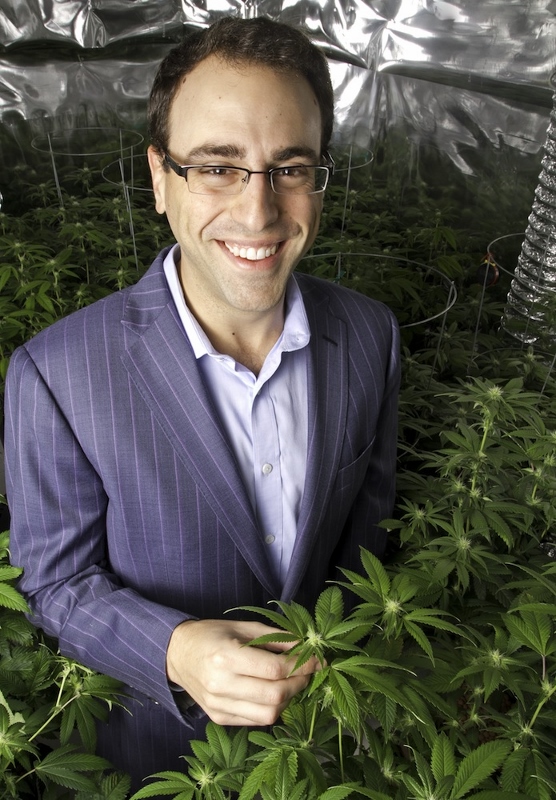
Embracing new experiences means challenging our preconceived notions and stepping beyond the boundaries of what we think we know. For example, I once found myself in the company of people who were using cannabis—not the stereotypes I had been conditioned to expect, but professionals who were thoughtful, productive, and grounded. This experience challenged my assumptions and reminded me that growth often comes from being open to new perspectives, rather than clinging to outdated beliefs. It’s this openness to learning and adaptation that distinguishes those who move forward from those who remain stuck in old patterns.
This is the difference between Forward-Looking People (FLPs) and Backward-Looking People (BLPs). BLPs are stuck in their old models of the world. They resist new information. They’re afraid of change. They’re trying to find a state of perfect, static balance, which is a recipe for stagnation and death. FLPs, on the other hand, embrace the chaos. They understand that the arrow of time only moves in one direction. They are constantly updating their internal models. They are lifelong learners. They are the ones who will thrive in the 21st century.
Are you an FLP or a BLP? Are you feeding your AI new data, or are you letting it run on an outdated operating system? Are you embracing the chaos, or are you hiding from it? The choice is yours. But remember, the universe doesn’t care about your comfort. It only cares about the forward flow of time.
The Takeaway
So, what’s the takeaway here? It’s simple. You are an AI. A biological one, but an AI nonetheless. And you have a choice. You can either be a passive user of this incredible technology, or you can become an active operator. Here’s how:
- Feed Your AI: Consciously seek out new information, new experiences, and new perspectives. Read books that challenge you. Talk to people who disagree with you. Travel to places you’ve never been. Your brain craves new data. Don’t starve it.
- Embrace Prediction Error: When you make a mistake, when you’re wrong about something, don’t beat yourself up. Celebrate it. A prediction error is a learning opportunity. It’s your brain telling you that it’s time to update your model. The only real failure is the failure to learn.
- Get Comfortable with Chaos: Stop trying to control everything. Stop trying to find perfect balance. Life happens on the edge of chaos. That’s where creativity, innovation, and growth happen. Learn to surf the wave. As Dr. Bob would say, “You’re either flowing with the arrow of time, or you’re going to get run over by it.”
- Know Your Operating System: Learn about your brain. Learn about the endocannabinoid system. Understand how you learn, how you make decisions, and what motivates you. The more you understand your own internal AI, the better you’ll be able to use it.

Comments
Related Articles
Dr. Bob's Flow vs. The Tao
The Wizard Behind the Curtain
The Map is Not the Territory

The Universe Doesn't Care About Your Feelings
The Hawaiians Knew: An Introduction to Huna
Want More?
Subscribe to The Forward Look on YouTube to get notified when new episodes drop.
Subscribe