AI is a Mirror, Not a Monster
Why artificial intelligence illuminates human consciousness.
The Mirror of Intelligence
AI isn't a threat—it's a mirror. It's forcing us to confront questions about consciousness, creativity, and what makes us human.
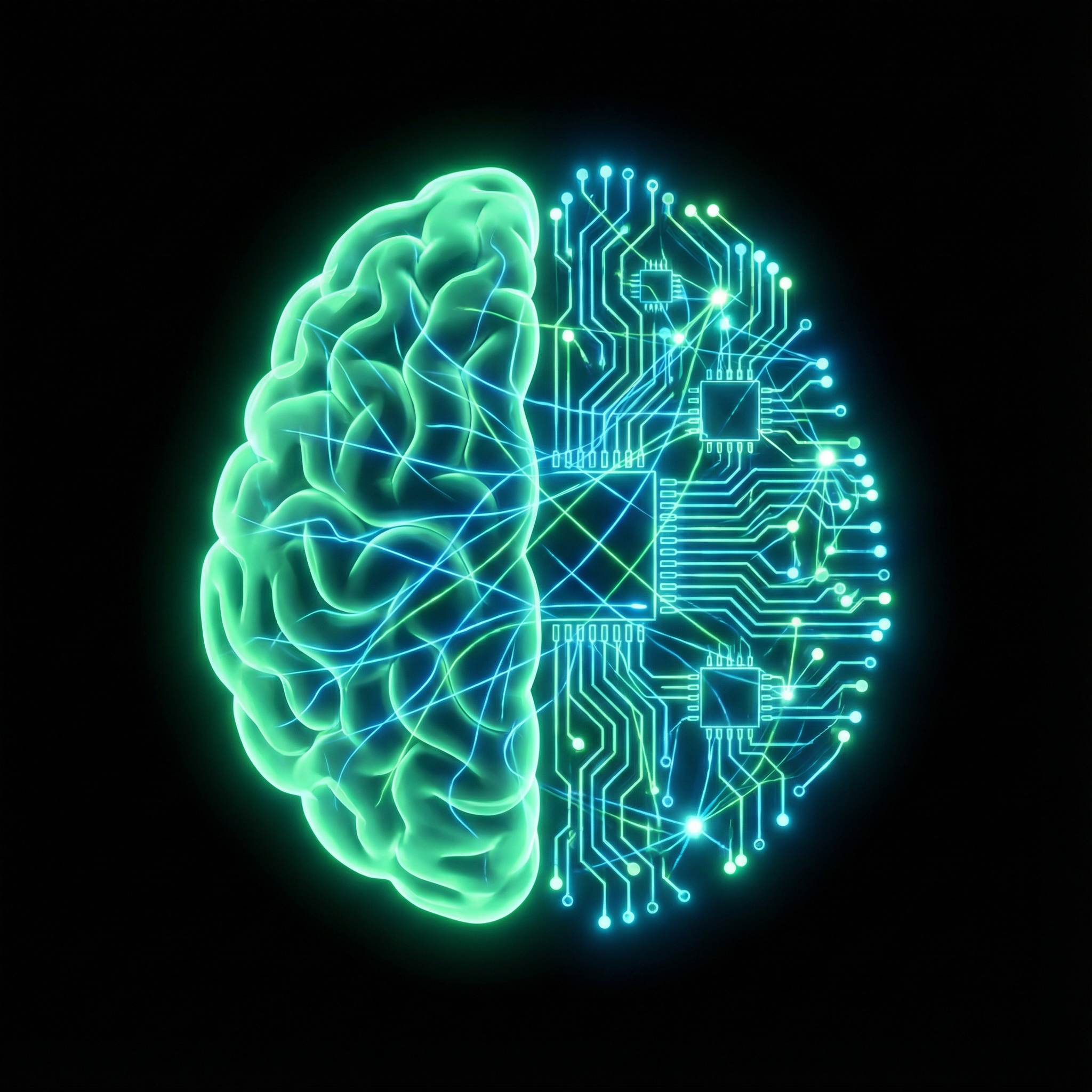
A persistent myth holds that consciousness will emerge from silicon, given sufficient complexity. Scale up the parameters, feed it enough data, and awareness will spark into being. The logic seems plausible. It is also wrong.
The assumption rests on a category error: that consciousness is a feature of complexity rather than a feature of embodiment. The human brain is complex, and it's conscious. A large language model is complex. But complexity alone isn't the variable that matters.
This thinking stems from a misunderstanding of what life is. We're taught to think of the world in terms of balance—homeostasis, equilibrium, a state of rest. But that describes death, not life. Life exists at the edge of chaos, in a constant struggle against the universe's march toward disorder. Living systems maintain their organization by fighting entropy in real-time.
"AI is an equilibrium machine. It seeks the most statistically probable, stable answer. That is precisely why it will never be conscious."
So, how does this apply to the real world? It means we need to stop looking for the ghost in the machine. The ghost was never there. The magic isn't in the complexity of the wiring; it's in the fire that animates the flesh.
An AI is a closed system. It can be incredibly complex, with trillions of parameters, but it's still fundamentally a deterministic system. It doesn't need to eat. It doesn't need to survive. It has no skin in the game. It doesn't have a body, an endocannabinoid system whispering feedback about its internal and external environment. It has no "self" to organize.
This is the chasm that AI can never cross. Consciousness is not about intelligence. It's about embodiment. It's about being an open system, coupled with its environment, constantly adapting to stay alive. It's about having a stake in the outcome.
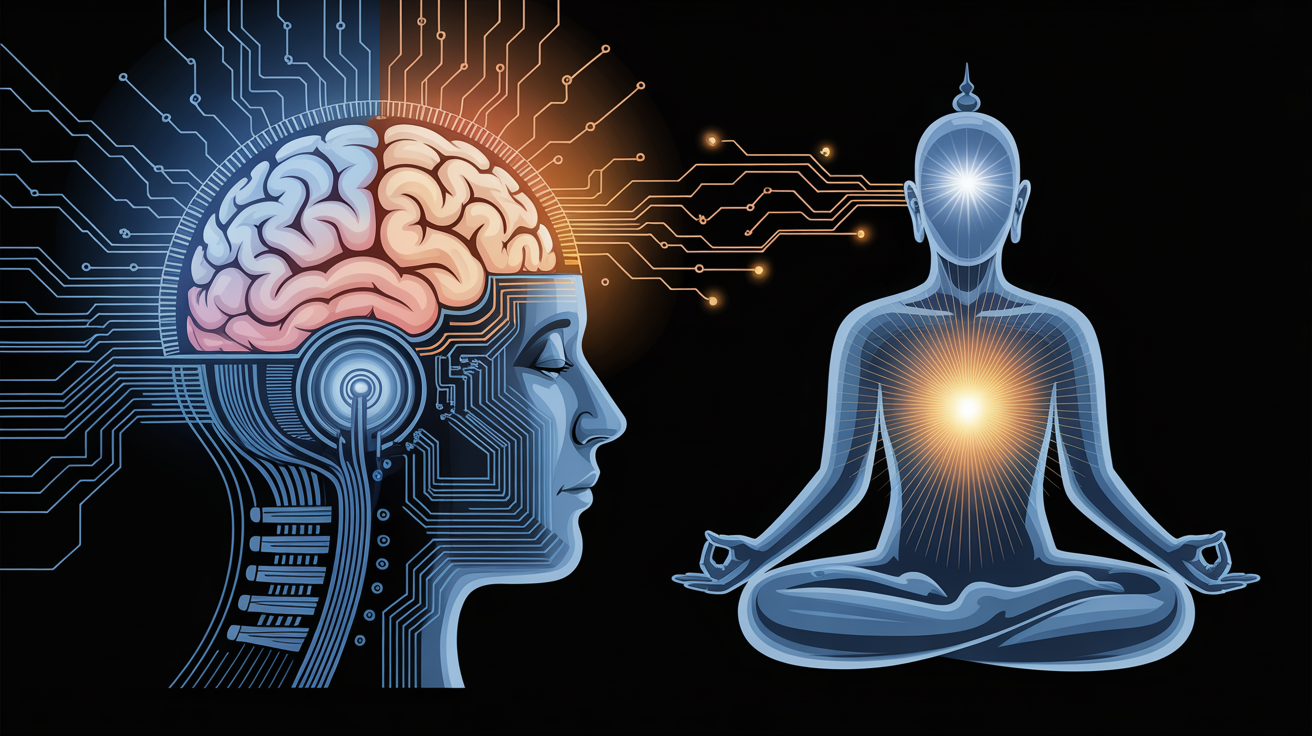
Long before neuroscience, contemplative traditions mapped the territory of consciousness with remarkable precision. They didn't have brain scans. They had 2,500 years of rigorous first-person investigation.
The Buddhists discovered that consciousness isn't computation—it's awareness of awareness. When you meditate, you notice thoughts arising and passing. What notices? The observing awareness can't be reduced to the thoughts it observes. This is the Hard Problem of consciousness, encountered through practice rather than theory.
The Advaita Vedanta tradition in India went further: the witness consciousness that observes experience is itself the fundamental nature of reality. The observer cannot be the observed. An AI processes information, but nothing observes that processing from the inside. There's no "what it's like" to be a language model.
Both traditions insisted on embodiment. Buddhist meditation isn't purely mental—it involves the breath, the body, the sensation of sitting. The body isn't incidental to consciousness; it's constitutive of it. This is why monks meditate rather than think their way to enlightenment.
"The ancient contemplatives didn't solve the Hard Problem of consciousness. But they mapped the territory with precision that modern AI researchers would do well to study."
AI can process data about meditation. It cannot meditate. It can generate text about awareness. It cannot be aware. The difference isn't semantic—it's ontological.
AI isn't coming for your soul—it doesn't have one to offer in exchange. What it is doing is forcing humanity to confront questions we've avoided for millennia: What is consciousness? What makes experience meaningful? What's the difference between intelligence and wisdom?
The far-from-equilibrium perspective cuts through the hype. Consciousness isn't an emergent property of complexity—it's a feature of embodied, open systems fighting entropy in real-time. AI is a closed system, an equilibrium machine dressed up in probabilistic clothing. It can mimic intelligence, but it cannot experience it.
This should be liberating, not threatening. AI will automate the routine, the predictable, the backward-looking. What it cannot touch is the forward-looking capacity for genuine novelty, for creative leaps, for the kind of adaptation that only comes from having skin in the game. That's your territory. Own it.
Continue your journey through the Far From Equilibrium framework.
View All Pillars →No. AI is an equilibrium machine—a closed system that seeks the most statistically probable, stable answer. Consciousness requires embodiment: being an open system coupled with its environment, constantly adapting to stay alive. AI has no body, no survival pressure, no stake in the game, and no "self" to organize.
AI is not an evolutionary successor—it's a sophisticated mirror. It can only recombine patterns from the past; it cannot create genuine novelty. Humans are Forward-Looking People (FLPs), designed to adapt and evolve. AI is the ultimate Backward-Looking Person (BLP), trapped in its training data. It's a powerful tool, but confusing a tool with a living, evolving entity is a category error.
Fear is a BLP response. The FLP approach is to understand AI as part of the natural evolution of complexity in the universe. The question isn't whether AI will change everything—it will. The question is whether we'll adapt and flow with that change or resist it futilely.
Buddhist and Vedantic traditions discovered through 2,500 years of rigorous practice that consciousness isn't computation—it's awareness of awareness itself. The observer can't be reduced to what it observes. Both traditions insist on embodiment: meditation involves the breath, the body, the sensation of sitting. This is why an AI can process data about meditation but cannot actually meditate. The difference between processing information and being aware is ontological, not merely technical.