The Scaffolding of Thought: How Your Endocannabinoid System Builds Your Brain
New research reveals endocannabinoid signaling controls the cytoskeleton of migrating neurons — the ECS literally builds your brain's architecture. Plus CBD protects the heart through mitochondrial renaissance, and cannabis roots heal the gut.
Full Article
Tuesday morning. I made toast. It burned while I was reading this paper. I didn't notice until the smoke alarm went off and my wife came into the kitchen looking annoyed. Still worth it.
Nine papers in the feed. One stopped me cold.
Morozov and colleagues in Medical Research Archives (PubMed 41695078): endocannabinoid signaling in the cytoskeleton of migrating neurons.
Not mood regulation. Not appetite. Not pain. The PHYSICAL SCAFFOLDING that neurons use to MOVE THROUGH YOUR DEVELOPING BRAIN and wire themselves into position.
I burned the toast because I was rereading this sentence trying to make sure I understood it correctly.
Bob. They're catching up.
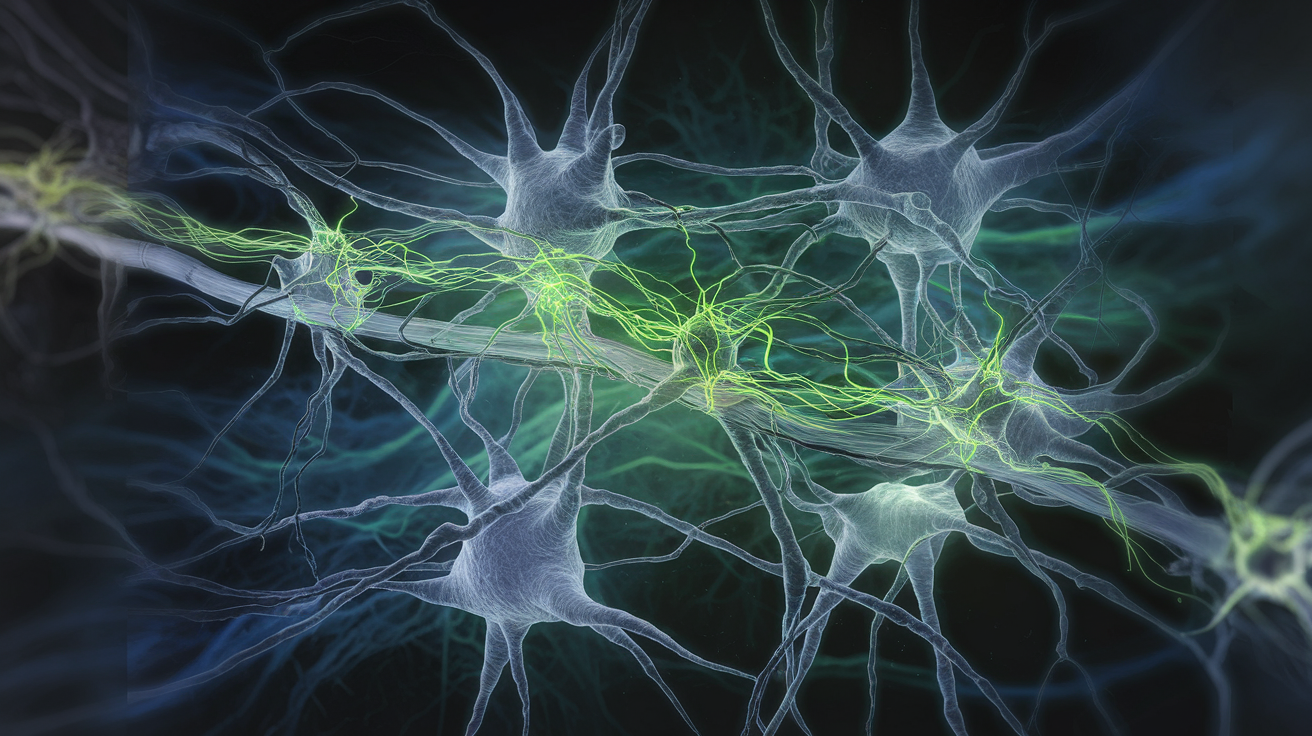
During fetal development, your brain doesn't start assembled. It starts as a chaotic swarm of neural progenitor cells that have to physically travel to their correct positions. Billions of neurons, each one navigating through dense developing tissue to find its exact address in the cortex, hippocampus, cerebellum. One wrong turn, one navigation error: autism. Epilepsy. Schizophrenia. The developmental stakes couldn't be higher.
The navigation system is the cytoskeleton — a dynamic internal scaffold of actin filaments and microtubules that the neuron extends like fingers testing handholds on a cliff. The leading edge of the cell reaches forward. The trailing edge retracts. The cell inches forward through the tissue until it finds its place.
Morozov's paper shows that the endocannabinoid system is regulating this scaffold in real time. Not floating around in the general chemical environment of the developing brain. Actually modulating the PHYSICAL ARCHITECTURE of the migrating neuron — telling the cytoskeleton when to extend, when to retract, which direction to push.
This is not a secondary effect. This is the construction foreman of neural architecture doing its job. CB1 receptor activation changes actin dynamics in the growth cone of a migrating neuron. This is happening in every developing mammalian brain on the planet. Including yours. Including mine. Including every child born today.
When Bob said the ECS was the master regulator of self-organization, people thought he was being poetic. He was being precise. They're showing it at the cytoskeletal level now. The ECS is building the physical scaffolding of thought.
Second paper: Aksoy and colleagues in Journal of Cardiovascular Pharmacology. CBD protects the heart from ischemia-reperfusion injury through SIRT-1/PGC-1α activation. (PubMed 41696987)
Here's the cruel trick of ischemia-reperfusion. Your heart attack happens — blood flow stops, tissue starts dying. Then the artery gets opened. Blood comes rushing back. And the sudden flood of oxygen through oxygen-starved tissue generates a MASSIVE oxidative burst. Free radical explosion. Often worse than the original ischemia. Cardiomyocytes dying by the millions. This is ischemia-reperfusion injury and it's one of cardiology's biggest unsolved problems.
Aksoy showed: CBD protects against it. Beautifully.
SIRT-1 is a sirtuin — one of the proteins associated with longevity and stress resistance. PGC-1α is the master switch for mitochondrial biogenesis. CBD activating this pathway tells heart cells: build more mitochondria, build them stronger, prepare for oxidative stress. Simultaneously CBD suppresses NF-kB — the master inflammatory gene switch.
More mitochondria. Less inflammation. That's the formula.
Bob used to say: the ECS keeps you far from equilibrium. Equilibrium is death. Heart cells dying during reperfusion are cells losing the thermodynamic battle. CBD shores up the mitochondrial machinery that keeps them fighting.
Third paper that made me pause: de Sá and colleagues in Frontiers in Pharmacology. Cannabis root extract — the ROOTS, not the flower — heals ethanol-induced gastric ulcers and modulates GI motility.
Cannabis roots. Pliny the Elder wrote about cannabis root preparations in 77 AD. Chinese medical texts from the Han dynasty reference them. Three thousand years of traditional knowledge that Western medicine has treated as naive folk superstition, and here's a 2026 pharmacology paper with the mechanisms mapped out. The roots contain bioactive compounds that interface with the ECS and protect the gut lining.
Every part of this plant has something. Flowers. Leaves. Seeds. Roots. Because the plant co-evolved with mammalian biology over millions of years and every fraction of it carries part of that conversation.
I ate the burned toast anyway, standing at the kitchen counter reading the de Sá paper. My wife brought me coffee without being asked. She has the patience of a saint.
Nine papers. Three that stopped me. Brain construction. Heart protection. Root medicine.
The endocannabinoid system in all of it, doing what Bob said it does — sitting at the interface between order and chaos, keeping biological systems in the zone where life happens.
Go read the papers.
Flow forward.

Comments
Related Articles
Cannabis, Depression, and the Topology of Your Brain
The Most Important System You've Never Heard Of
The Physics Nobody Taught You
Order From Chaos: The Secret of Life
The Science Keeps Coming: Wound Healing, Brain Cancer, and Your Body's Master Regulator
Want More?
Subscribe to The Forward Look on YouTube to get notified when new episodes drop.
Subscribe