Why Modern Medicine is Failing (And What You Can Do About It)
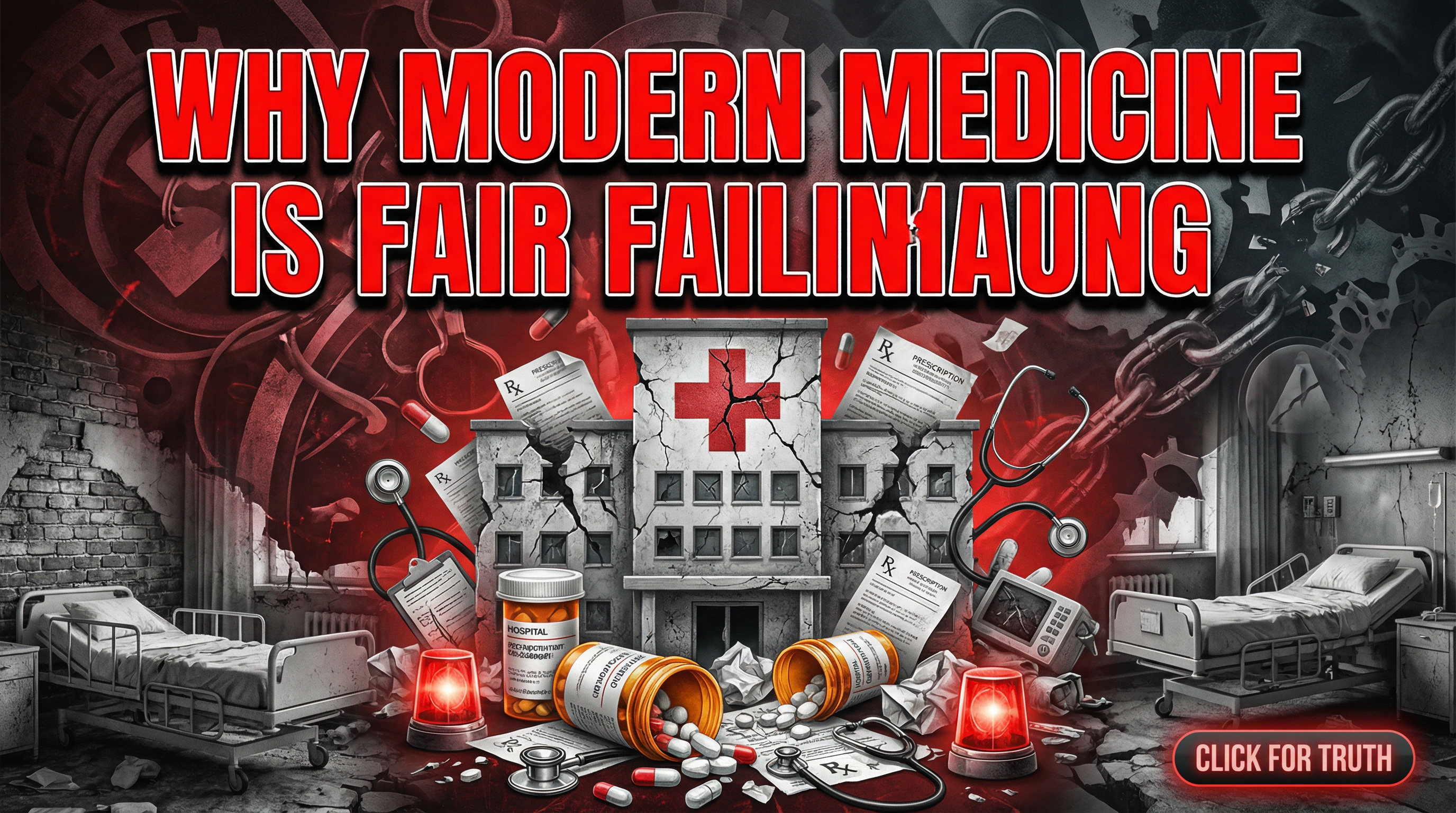
Treating symptoms, not causes. Ignoring the ECS. Fighting the body instead of working with it. The Forward Look critique of healthcare.
Full Article
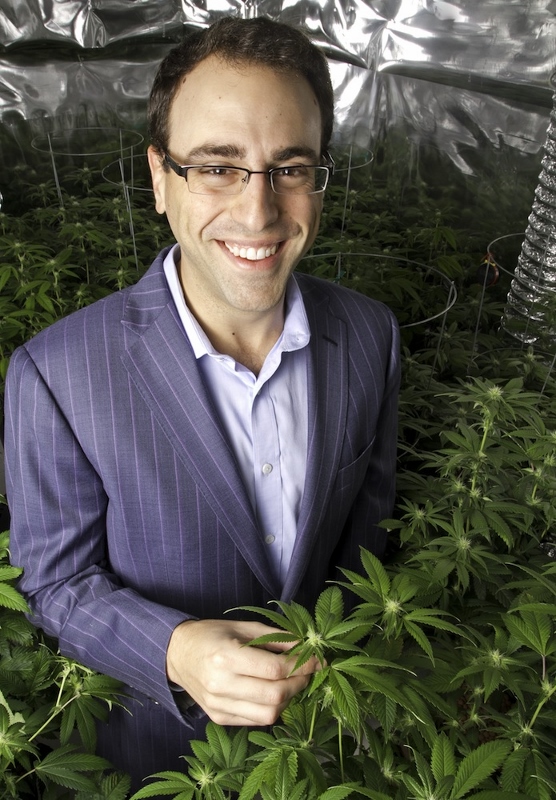
_Editor's Note: This article is part of Justin Hartfield's "Far From Equilibrium" series, a collection of writings on thermodynamics, the endocannabinoid system, and the future of human potential. The views expressed are his own._
Why Modern Medicine is Failing (And What You Can Do About It)
What if I told you that your body isn't a machine to be fixed, but a chaotic, self-organizing system that thrives on the edge of disorder? What if the very foundation of modern medicine—the idea that we can isolate a problem, prescribe a pill, and "fix" it—is fundamentally wrong?
It’s a hard pill to swallow, I know. We’re raised to believe in the white coat, the sterile office, and the prescription pad. We see our bodies as cars. When the "check engine" light comes on (a symptom), we take it to the mechanic (the doctor), who runs a diagnostic, replaces a part, and sends us on our way. It’s a clean, linear, and comforting narrative. It’s also complete bullshit.
This is the fundamental flaw in our healthcare system. It’s a system built on Newtonian physics—a clockwork universe of predictable cause and effect. But a living, breathing human being isn't a clock. You are a swirling, chaotic, unpredictable storm of energy. You are a system far from equilibrium.
The Problem: The Newtonian Machine vs. The Thermodynamic Body
For the last few centuries, we’ve been treating the human body like a machine. Got a headache? Here’s a painkiller to block the signal. High blood pressure? Here’s a beta-blocker to artificially lower it. Depression? Here’s an SSRI to manipulate your neurotransmitters. We’re constantly treating the what, but we almost never ask the why.
This is the approach of the Backward-Looking Person, the BLP. The BLP sees a symptom as a malfunction. They want to silence the alarm, not find the fire. They are terrified of chaos and desperately seek the comfort of a predictable, controllable world. They want to believe that for every problem, there is a single, simple solution.
But your body doesn’t work that way. A symptom is not a malfunction. A symptom is a signal. It’s your body’s intelligent, adaptive response to stress. It’s a flare sent up from the depths of your biology, screaming that the system is struggling to maintain order in the face of overwhelming chaos. When you mask that symptom, you’re not fixing the problem; you’re shooting the messenger. You’re unplugging the damn fire alarm while the house burns down around you.
Suffering for decades w poor sleep; finally diagnosing my UARS via AI and help from experts on Youtube and getting jaw surgery to expand myjaw. Feeling the same feeling of enlightment the yogis and mystics of all traditions felt.
The Application: Working With Your Body, Not Against It
When you understand these principles, the entire paradigm of health and disease flips on its head. You stop seeing your body as a broken machine and start seeing it as an intelligent, adaptive system that is doing its best to survive in a stressful world.
Chronic disease, from this perspective, is not a collection of unrelated malfunctions. It is a systemic failure of adaptation. It’s what happens when the body is so overwhelmed by stress and inflammation that the ECS can no longer cope. The system gets "stuck." It loses its ability to flow, to adapt, to self-organize. It drifts closer to equilibrium, a state of low energy and high disorder.
So what do we do? We stop fighting the body. We stop masking the symptoms. We start working with the body to restore its natural, inherent ability to heal and self-organize.
This is where things like cannabis come in. The cannabinoids from the cannabis plant (phytocannabinoids) are molecular mimics of our own endocannabinoids. For individuals with a deficient or dysfunctional ECS, consuming cannabis isn't about getting high. It’s about supplementing a critical physiological system. It’s like giving a conductor a new baton when their old one is broken. You’re restoring the flow of information, allowing the system to re-organize and find a new, healthier state of being.
But it’s not just about cannabis. It’s about everything you do. It’s about the food you eat, the way you move your body, the quality of your sleep, the stress in your life. All of these things are inputs of energy and information that either support your body’s ability to create order or push it further into chaos.
The Takeaway: How to Be a Forward-Looking Person
Being a Forward-Looking Person (FLP) means taking radical responsibility for your own health. It means rejecting the passive role of the patient and becoming the active, empowered CEO of your own biology. It means embracing the chaos and learning to ride the wave.
Here’s how you start:
- Question Everything: The next time you have a symptom, don’t just reach for a pill. Get curious. Ask why. What is your body trying to tell you? What is the underlying stress that is causing this signal to appear?
- Feed the Flow: Your body is constantly burning energy to create order. Give it the right fuel. This means high-quality, nutrient-dense food. It means moving your body in ways that feel good. It means prioritizing sleep and recovery. It means actively managing your stress.
- Embrace Chaos: Healing is not a straight line. It’s a messy, chaotic, up-and-down process. There will be good days and bad days. There will be moments when you feel like you’re going backward. This is normal. This is how complex systems reorganize themselves. Don’t fight it. Surrender to it.
- Listen to Your Body: You have an innate intelligence within you that is far wiser than any doctor or textbook. Learn to listen to its subtle whispers before they become deafening screams. Your intuition is your greatest diagnostic tool.
Stop being a passenger in your own life. Stop outsourcing your health to a broken system. You are the one you’ve been waiting for. You are the healer.
References
- Melamede, R. (2005). Harm reduction-the cannabis paradox. Harm Reduction Journal, 2(1), 17. [https://doi.org/10.1186/1477-7517-2-17](https://doi.org/10.1186/1477-7517-2-17)
- Prigogine, I., & Stengers, I. (1984). Order Out of Chaos: Man's New Dialogue with Nature. Bantam Books.
Comments
Related Articles
Stress is Killing You (Literally)
Why AI Won't Replace Consciousness
Cannabis Prohibition: A Case Study in Government Failure
The Stoner Stereotype is Dead
The Skillset Cannabis Unlocks
Want More?
Subscribe to The Forward Look on YouTube to get notified when new episodes drop.
Subscribe