Why Ants Never Made iPhones
The evolutionary basis for adaptability.
Forward-Looking vs Backward-Looking People
One of the most provocative ideas in modern thinking: humanity divides into two types. Forward-Looking People embrace change and create the future. Backward-Looking People cling to the past.
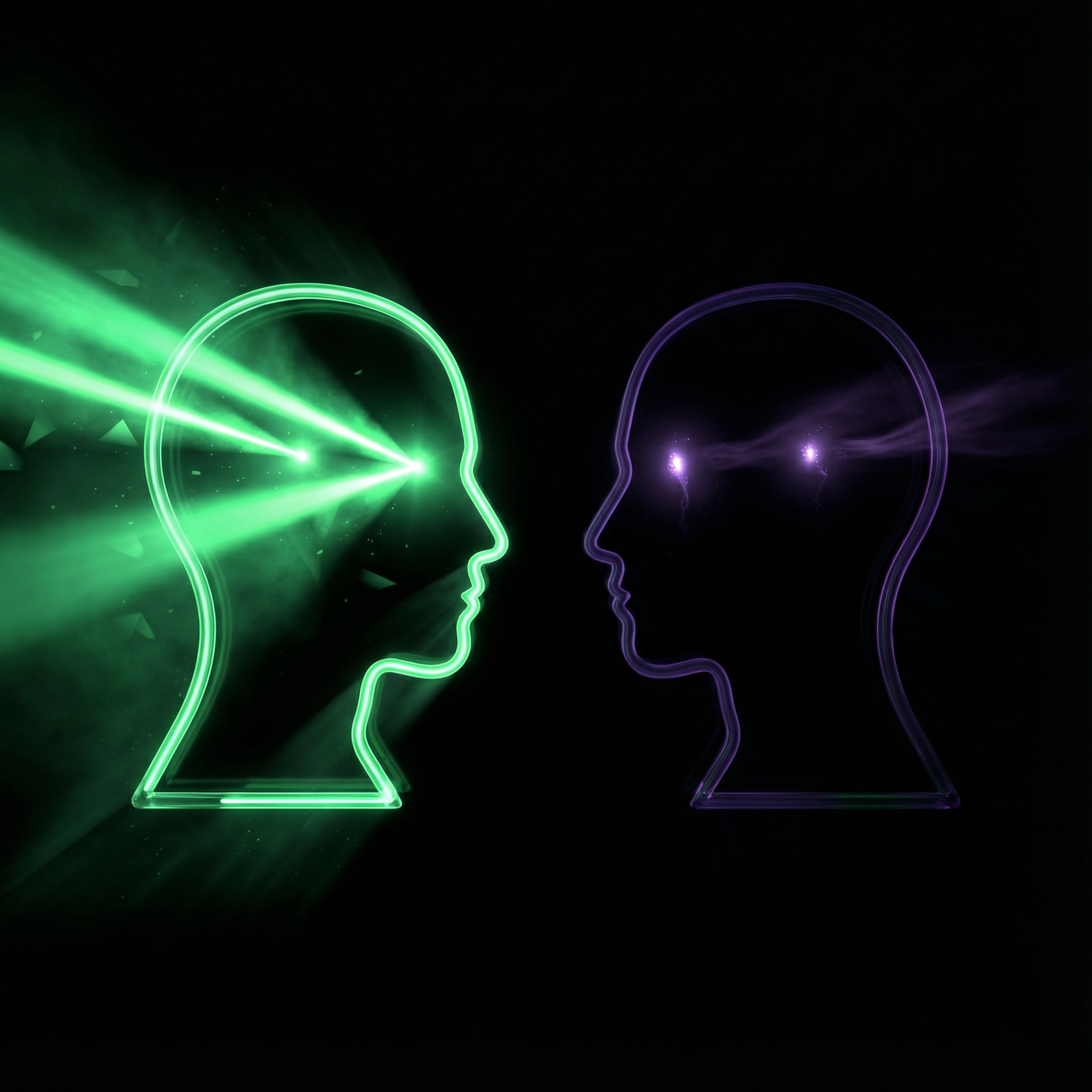
One of the most provocative ideas in modern thinking: humanity is fundamentally divided into two types based on their relationship with time and change.
Forward-Looking People embrace change as natural and necessary. They adapt readily to new information, create the future rather than preserve the past, and feel comfortable with uncertainty because they see it as opportunity. They're optimistic, believing they can handle whatever comes, and they're open-minded enough to update their beliefs when presented with evidence.
Backward-Looking People resist change as threatening. They cling to established patterns even when they fail, trying to preserve the past and impose old solutions on new problems. They demand certainty because they see uncertainty as danger. They're fearful about unknown futures and closed-minded, unable to easily update their beliefs.
This isn't just psychology—it's biochemistry. People with higher endocannabinoid activity tend to be FLPs, while those with lower activity tend to be BLPs. The endocannabinoid system regulates stress response, fear extinction, neuroplasticity, and literally the capacity for open-mindedness.
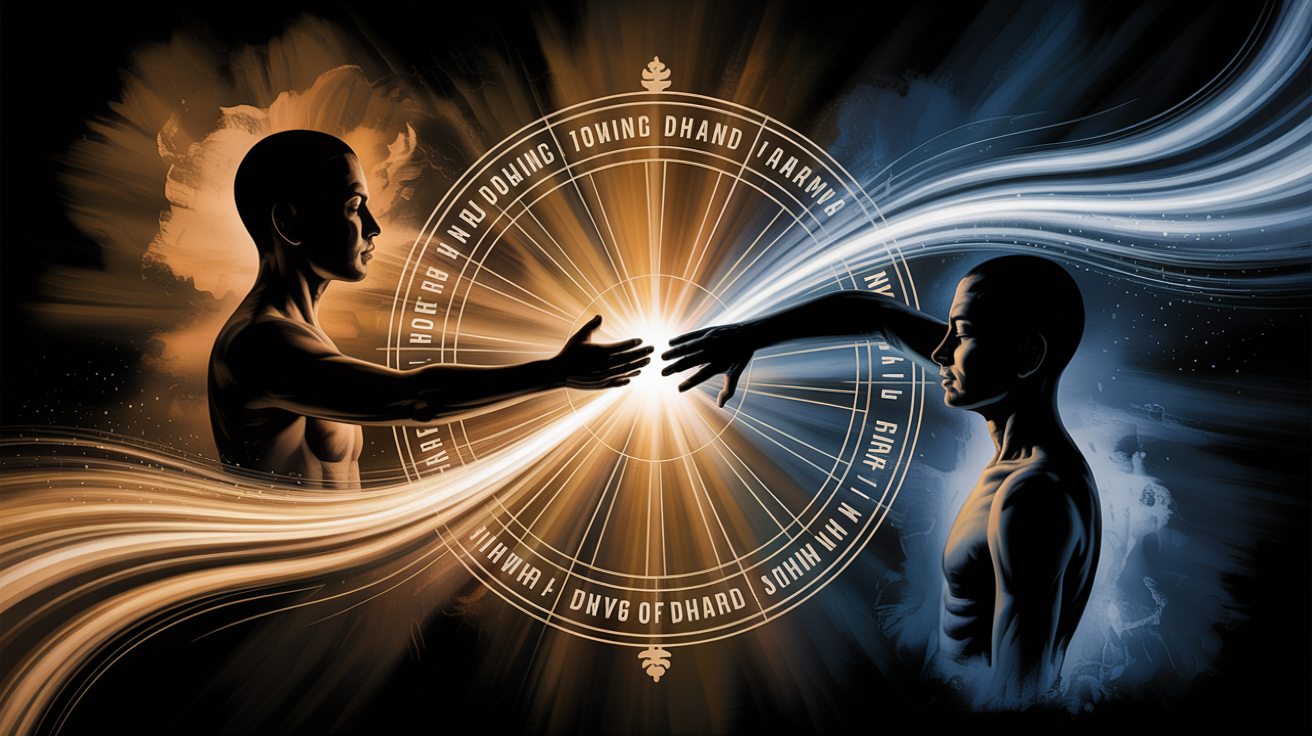
This division isn't new. Ancient wisdom traditions identified the same fundamental split—they just used different vocabulary.
The Buddhists called it attachment versus non-attachment. Those who cling to fixed states—who upadana (grasp)—suffer because they fight impermanence. Those who flow with change—who practice vairagya (non-attachment)—thrive because they align with reality. BLPs grasp. FLPs flow.
Hindu philosophy described samskaras—mental impressions from past experiences that create rigid patterns of thought and behavior. The more samskaras you accumulate without processing, the more backward-looking you become. Yoga and meditation were technologies for dissolving these rigid patterns—for becoming more forward-looking.
Karma itself is a feedback loop: past actions creating present constraints. BLPs are trapped in karmic patterns, repeating the same responses to new situations. FLPs break the cycle through conscious awareness and adaptation.
"The Taoists called it wu wei—not passivity, but action aligned with flow rather than resistance. The Gita's Krishna counseled Arjuna to act without attachment to outcomes. Different traditions, same insight: rigidity is suffering; flexibility is liberation."
Modern neuroscience confirms what contemplatives discovered through practice: the capacity to let go of fixed patterns, to update beliefs, to embrace novelty is trainable. Meditation increases cognitive flexibility. So does supporting your endocannabinoid system. The path from BLP to FLP has always been available.
Key evidence comes from the Morris Water Maze experiment. Normal mice with CB1 receptors can learn a platform's location, and when it moves, they relearn the new location and update their mental map.
But CB1 knockout mice, lacking cannabinoid receptors, learn the original location fine but always return to the old position even after finding the new one. They cannot relearn. They're hardwired.
This is the biological basis of BLPs—they literally cannot rewire their thinking as easily.
The evolutionary context goes back 500 million years to the split between protostomes and deuterostomes. Insects developed rigid exoskeletons and highly structured societies but no cannabinoid receptors. Vertebrates developed internal skeletons and, crucially, the endocannabinoid system emerged.
This is why ants never made iPhones. They have perfect execution of ancient patterns but zero capacity for innovation. The endocannabinoid system is the evolutionary innovation that enabled adaptability, creativity, and technological civilization.
The framework makes a controversial political claim: BLPs disproportionately seek and gain power because they crave control to reduce their stress from change. They value hierarchy and clear, unchanging structures. FLPs value freedom and don't seek to control others.
Look at history's "leaders"—Genghis Khan, Hitler, authoritarian rulers throughout time—versus the notably shorter list of beneficial leaders like Gandhi and Mandela.
Research supports this. Studies show that people with lower physiological stress responses to change tend to support foreign aid, immigration, and pacifism, while those with higher stress responses favor defense spending, capital punishment, and war. This isn't about political parties—it's about orientation toward change.
We're at a critical juncture. Humanity's impact on the environment is unprecedented, and old solutions won't work for new problems. BLPs in power risk leading us toward extinction because they cannot adapt.
We need FLPs in leadership positions and increased cannabinoid activity in the population to enable the open-minded, adaptive thinking our survival requires.
The current global chaos—climate instability, financial volatility, political polarization—represents a far-from-equilibrium phase change. The system is reorganizing.
The question is whether we transition to higher organization through FLP-led cooperation or collapse through BLP-led resistance and control.
From this perspective, cannabis prohibition represents BLPs attacking FLPs—cannabinoid-deficient people criminalizing cannabinoid-sufficient people for having the biochemistry that enables adaptation. The term for this: biochemical racism.
The revolutionary implication is that we don't have to wait for evolution. We can consciously increase cannabinoid activity through:
Darwin's key insight was that survival of the fittest means survival of the most adaptable—not strongest or smartest, but most flexible. The endocannabinoid system is the biological mechanism enabling that adaptability, and for the first time in history, we can consciously accelerate our own evolution toward it.
The FLP/BLP framework isn't about labeling people—it's about understanding the biological and psychological forces that shape how we respond to an uncertain future. And more importantly, it's about recognizing that these orientations aren't fixed. They can be changed.
The FLP/BLP framework is provocative because it cuts through the noise of political tribalism and gets to something deeper: our fundamental orientation toward time, change, and uncertainty. This isn't about left versus right—it's about forward versus backward.
The evidence from neuroscience is clear: your capacity for open-mindedness, for updating beliefs, for embracing novelty is not just psychological—it's biochemical. The endocannabinoid system literally enables cognitive flexibility. Without it, you're like those CB1 knockout mice, forever returning to where the platform used to be.
The good news is that you're not trapped. Unlike the mice, you can consciously support your endocannabinoid system through exercise, omega-3s, stress management, and yes, cannabis. You can choose to become more forward-looking. In a world that's changing faster than ever, that choice might be the most important one you make.
Continue your journey through the Far From Equilibrium framework.
View All Pillars →FLP stands for Forward-Looking Person and BLP stands for Backward-Looking Person. These terms describe two fundamentally different orientations toward life, change, and the future—one embracing flow and adaptation, the other resisting change and clinging to the past.
While FLP/BLP thinking can manifest in political views, it's fundamentally about psychology and thermodynamics, not partisan politics. Both political sides have FLPs and BLPs. It's about how you relate to change, uncertainty, and new information—not which party you vote for.
Yes, but it requires conscious effort and often a shift in biochemistry. Practices like meditation, exercise, cannabis use, and deliberately exposing yourself to new ideas can help shift your orientation. The endocannabinoid system plays a key role in this flexibility.
Buddhist, Hindu, and Taoist traditions all identified the same fundamental split thousands of years ago. The Buddhists called it attachment versus non-attachment—those who cling to fixed states suffer, while those who flow with change thrive. Hindu philosophy described samskaras (mental impressions) that create rigid patterns, and karma as feedback loops trapping us in past responses. The Taoists taught wu wei—action aligned with flow rather than resistance. Different vocabulary, same insight: rigidity is suffering; flexibility is liberation.