Why Eastern Religions Got It Right
They understood thermodynamics without the math.
The Only Constant is Change
In a world changing faster than ever, the ability to adapt is the only sustainable advantage. The endocannabinoid system is evolution's answer to adaptation.

If you want a single law of the universe, here it is: change is relentless. The world is spinning faster than ever—technologies, economies, even the climate are in constant flux. In this chaos, the only real edge is your ability to adapt. That's not just a motivational poster—it's biology. Evolution's secret weapon isn't brute strength or raw intelligence. It's flexibility. And the endocannabinoid system? That's nature's built-in adaptation toolkit.
Let's cut through the noise. If there's one thread that ties together everything from quantum physics to your morning coffee, it's this: adaptation is everything. The arrow of time only points forward—there's no rewinding the tape. In a universe governed by far-from-equilibrium thermodynamics, you're either processing energy and adapting, or you're decaying. The endocannabinoid system is your body's real-time adaptation engine, constantly tuning your internal state to match the external world.
FLIPs (Forward-Looking, Innovative People) thrive because they adapt. BLPs (Backward-Looking People) get left behind because they can't. It's that simple.
"The future belongs to the adaptable. Rigidity is extinction. Flexibility is survival."
Here's a mind-bender that flips Darwin on his head: it's not genes that drive evolution—it's metabolism. The flow goes like this:
Metabolism → Epigenetics → Genetics
In other words, your ability to adapt metabolically, right now, is the tip of the evolutionary spear. The choices you make, the energy you process, the way you respond to stress—these ripple out, shaping your biology and, over time, your very DNA.
Adaptation isn't just a trait. It's the engine of evolution itself.
Let's talk about Jeanne Calment, the French supercentenarian who lived to 122. She smoked until she was 117, devoured chocolate by the kilo, and washed it down with port wine. By every modern health standard, she should have been a cautionary tale, not a record-breaker.
So what was her secret? Adaptation.
Calment was the living embodiment of "don't sweat the small stuff." She didn't let stress eat her alive. Her calm, flexible mindset was her shield—protecting her from the corrosive effects of chronic stress. She adapted, moment by moment, to whatever life threw at her.
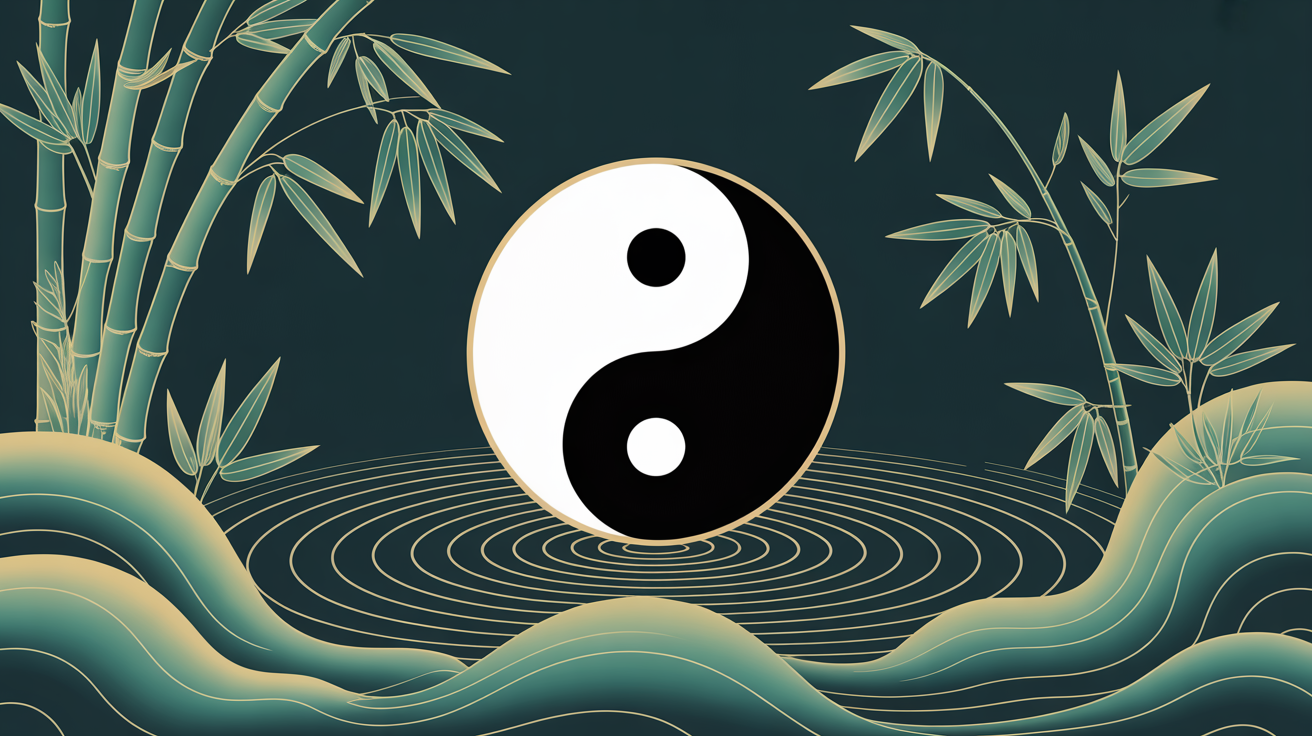
Here's the thing: none of this is new. Across the globe, ancient traditions figured out the science of adaptation millennia before we had the vocabulary to describe it.
The Taoists called it Wu Wei—intelligent yielding. The water that wears away stone not by fighting it, but by flowing around it. The bamboo that survives the hurricane by bending, while the rigid oak snaps. They understood that forcing outcomes creates resistance, while flowing with change creates power.
The Buddhists taught that attachment to fixed states causes suffering—because the universe is fundamentally impermanent. The arrow of time only points forward. Clinging to what was is fighting thermodynamics itself. The Buddha wasn't being mystical. He was being precise.
The Bhagavad Gita's Krishna was essentially teaching thermodynamics: act without attachment to outcomes, stay in flow, adapt to what arises. Arjuna's paralysis came from rigidity. Krishna's teaching was to become like water—responsive, present, adaptive.
Different cultures, different vocabularies, same physics. The Tao, dharma, karma—these weren't spiritual abstractions. They were descriptions of far-from-equilibrium dynamics before anyone had the math.
The Tao is thermodynamics. The ancient sages were describing the same universal principles of adaptation and flow that govern everything from cellular metabolism to cosmic evolution. When you support your endocannabinoid system, you're not just optimizing biology—you're aligning with what every wisdom tradition has pointed toward.
Half a world away from China and India, the Hawaiian kahunas arrived at the same truth through a different path. They called life force energy mana—and they understood that mana isn't just spiritual currency. It's the same thermodynamic flow that Prigogine would describe millennia later. When your mana is strong, you adapt. When it's blocked, you stagnate.
The kahunas weren't primitive mystics—they were scientists without equations. They developed sophisticated practices for managing energy flow: ho'oponopono for clearing energetic blockages (what we'd now call reducing stress and inflammation), aloha as alignment rather than mere greeting, and an entire system for maintaining optimal energetic function.
When you hold a grudge, you create a pocket of high entropy in your own system—a localized heat death. Ho'oponopono clears that blockage. It's not psychology. It's physics.
The Hawaiians even understood the connection between plant medicine and adaptation. They used kava and other plants to access altered states and modulate their internal systems—they were supporting their endocannabinoid system without knowing its name. Different vocabulary, same underlying reality: adaptation requires energy flow, and flow requires clearing what blocks it.
The universe rewards adaptability. The endocannabinoid system is your evolutionary adaptation toolkit. The more you flex, the longer—and better—you live. The future isn't for the rigid. It's for the resilient.
Adaptation isn't a passive process—it's an active choice you make every day through movement, nutrition, stress management, and mindset. The tools exist. The science is clear. The only question is whether you'll use them.
Adaptation is the meta-skill that makes all other skills possible. In a world where the rate of change keeps accelerating, the ability to adjust, learn, and evolve isn't just an advantage—it's the baseline for survival.
Jeanne Calment didn't live to 122 by following the rules. She lived that long because she didn't let life's inevitable stresses calcify into chronic damage. Her secret was metabolic and psychological flexibility—the willingness to flow rather than fight.
The endocannabinoid system is your built-in adaptation machinery. Support it through movement, proper nutrition, stress management, and adequate recovery. The future belongs to those who can bend without breaking, who can face uncertainty without fear, who understand that rigidity is just another word for death. Be adaptable. Be alive.
Continue your journey through the Far From Equilibrium framework.
View All Pillars →Adaptation is the process by which living systems maintain their far-from-equilibrium state by responding to environmental changes. It's not just survival—it's the continuous process of reorganizing and evolving in response to new challenges and opportunities.
The endocannabinoid system is your body's master adaptation system. It regulates stress responses, inflammation, mood, appetite, and countless other processes that help you adapt to changing conditions. When this system is deficient, your ability to adapt is compromised.
Stress pushes you further from equilibrium, which can trigger growth and adaptation (hormesis). But chronic, unmanaged stress depletes your endocannabinoid system and pushes you toward breakdown rather than breakthrough. The key is cycling between stress and recovery.
Multiple ancient traditions—Taoism, Buddhism, Hinduism, and Hawaiian Huna—all described the same thermodynamic principles of adaptation before modern science had the vocabulary. The Taoists called it Wu Wei (effortless action), the Buddhists taught non-attachment to impermanent states, Krishna taught acting without attachment to outcomes, and the Hawaiians understood mana (life force energy) as the same energy flow that maintains far-from-equilibrium systems. Different cultures, different words, same underlying physics of adaptation.